I would like to hear others experience judging and evaluating off-airport terrain for landing. What do you look for or what do you try and avoid? Do you only land at known sites? Do you scout sites on the ground before landing? How do you evaluate a site from the air?
It's an interesting (and perhaps educational) discussion that started in the hanger the other day that I though I might bring here.
Evaluating off-airport landing sites?
Fri Jan 04, 2013 10:42 pm
Evaluating off-airport landing sites?
Last edited by Cub271 on Sat Jan 05, 2013 8:20 am, edited 1 time in total.

Fri Jan 04, 2013 10:48 pm
Re: Evaluating off-airport landing sites?
In the words of Kevin..."If it looks smooth it might be...If it looks rough it IS" I obviously look for rocks... changes in colors in the grass or weeds usually indicate some kind of slope change. Figure out a way to "drag" or visualize a spot before ever landing it. I've done 9-10 passes on a spot before landing it. No shame in that. The first time always has some inherent risks. I've landed more than one spot and then walked it and found things that made me think...Glad I didn't hit that.

Experimental Avid Flyer STOL 582 Rotax
Fri Jan 04, 2013 11:01 pm
Re: Evaluating off-airport landing sites?


This was 15 plus years ago, and although the gravel bar was long and wide and looked easy, I screwed up. Because I had landed here before I didn't drag the gravel bar first looking for obstructions, and I didn't pick the exact spot I wanted to touch down. In short, I got lazy. In the bottom picture you can see the mostly buried log that I hit that collapsed the left main gear.
Fortunatly I was low and slow and wasn't hurt (other than my ego), the airplane flew off that same day with a new gear leg and propeller bolted on, but to reinforce the lesson I got to buy a major overhaul because of the prop strike.
Lesson(s) learned:
1) Drag the area, maybe more than once, until you are sure you have identified and have a clear picture of all all the potential hazards.
2) Pick the exact spot you are going to touch down and visualize your landing and roll out. Treat it like an airport and don't be afraid to go around if it's not going like you expect.
3) When you're off-airport, it's an uncontrolled enviornment. Even things that look easy and safe may not be. Don't get casual and/or overconfident.
Sat Jan 05, 2013 12:44 am
Re: Evaluating off-airport landing sites?
Thanks for sharing Cub271, visual reminders always seem to sink in better and I'm guessing many of us have been close to the same situation but got lucky. Some good advice there.
Sat Jan 05, 2013 4:51 am
Re: Evaluating off-airport landing sites?
Cub271 wrote:
I did the exact same thing Cub271. Your log is hard to see in that photo! No wonder you missed it. I never did see the root ball/stump that I hit. Our outcomes were very different though. I had 31" bushwheels mounted and although it was loud and felt very harsh, the ABWs just soaked it up. I expected to get out and see a very bad tear in the tire. Not even a mark. I felt stupid for not seeing the huge stump I just ran over, but _ _it happens no matter how careful we try to be.
My lessons learned were...
1) I got all my money back that I had spent on the ABWs "outrageous" price tag that day.
2) Money spent that limits damage is well spent, so I switched from a metal Borer prop to a composite.
3) The offairport environment gets riskier the more comfortable I get. Stay on edge.
Sat Jan 05, 2013 6:14 am
Re: Evaluating off-airport landing sites?
Before I land on roads, fields, backcountry strips etc. I question why I need to land there. Is it worth breaking my machine and being stranded (or worse) in some remote area? If so then I use this acronym: SHE PLOWS
Slope
Halfway point
Emergency landing spots
Performance of my machine in these conditions (weight, altitude, etc)
Length
Obstructions to approach/departure, landing
Wind
Surface
Then I'll drag it real low & slow . Maybe roll one wheel real light down it at a slow speed, yet fast enough to quickly pop the tire up and continue flying. Maybe try this with two wheels lightly. Sometimes it's rougher than I thought. When low enough to roll a tire , whether you actually place the tire on the suface or not, you'll see much more than you will just by dragging it from above.
Mike
Slope
Halfway point
Emergency landing spots
Performance of my machine in these conditions (weight, altitude, etc)
Length
Obstructions to approach/departure, landing
Wind
Surface
Then I'll drag it real low & slow . Maybe roll one wheel real light down it at a slow speed, yet fast enough to quickly pop the tire up and continue flying. Maybe try this with two wheels lightly. Sometimes it's rougher than I thought. When low enough to roll a tire , whether you actually place the tire on the suface or not, you'll see much more than you will just by dragging it from above.
Mike
Sat Jan 05, 2013 8:21 am
Re: Evaluating off-airport landing sites?
Off Airport landings require some very specific and thorough preparation and training. Failure in either or both of these can result in the pictured result.
Airports do a LOT for us, a fact that most pilots don't fully appreciate. The off airport environment offers none of those benefits/guarantees, and a LOT of potential traps.
Going off airport should not be a "Hey, let's go land somewhere" kind of operation, though often it is.
The first thing you MUST do prior to going off airport is to develop your skill set ON an airport. Runways have stripes....learn to land PRECISELY ON that stripe, and keep the airplane there, throughout the landing/takeoff roll. Every time.
Learn to choose your touchdown spot (NOT the bitter end of the runway) and train to land PRECISELY on that spot....NOT twenty feet down from that spot, and certainly NOT ten feet short of it. EVERY time.
Learn to fly your airplane at a comfortable slow flight speed down the runway center, just offset from the centerline, while ten feet off the ground, and looking at the runway for imperfections (most runways have them). Start this process at altitude by learning to fly precisely and consistently in slow flight, plus 5 mph, minus ZERO mph, EVERY time. Use the flaps...it's what they're for. Get proficient at this in the AIR at altitude before you try it close to the ground.
Most of this should be done initially with a COMPETENT and experienced instructor in the plane with you. When I say competent, I mean someone who knows what you're wanting to do, has a bunch of experience at it, AND knows your airplane type well. Beware the instructor who says "Well, I've never flown one of those, but I have a lot of time in a Cub, Cessna, etc...." Find someone who is familiar with YOUR airplane type, specifically. And REALLY familiar, not just a quick turn around the patch or so.
Practice VERY light touchdowns and VERY low passes along the runway centerline. Learn NOT to plunk the airplane on the surface....learn to finesse it on with some power. This is to evaluate the roughness of the surface....you're not going to land like this when you're actually landing....this is part of the airport prep process and is an essential skill as well.
Okay, so you've beat up several airports hard, and put in a number of hours of very specific training ON AIRPORT, and you can put the airplane precisely where you want it, ON AIRSPEED, ON TARGET, EVERY TIME. Your touchdowns are at MCA, EVERY TIME, and there is never doubt in directional control. If you're not quite there yet, you are NOT ready for the off airport environment. Sloppy doesnt work in the off airport environment. Note my comment on ski operations on the surface the other day....those pictures illustrated a GREAT way to find hidden obstacles and if that had happened, you'd have the same result pictured in this thread.
NOW, you're ready to start THINKING about taking your airplane off airport. One of the initial poster's questions was do you go somewhere you've walked first, and the answer initially is YES!! Find a fairly easy gravel bar or ??? and go walk it. Or, go there with someone who's been there before IN THEIR PLANE and see how they do it. Understand that there are fools out there, so just because they've been there before doesn't mean they're doing it right.....judge for yourself. Nobody's perfect, including me.
So, do a couple of these that you can walk out first. Find the obstacles, ditches, etc. Mark them somehow, if you like, but get them firmly fixed in your mind.
Now, go get in your airplane, preferably with that experienced instructor if possible. Fly over the site, at say 100 feet and a good safe slow flight configuration and speed (NO, NOT 40 mph!!!). Look for your known obstacles. Got them all fixed in your mind? Now choose your landing centerline, obviously one that provides the longest length and avoids obstacles. Find some references that will allow you to hold that centerline once you're low....it'll look a LOT different from the surface. A small bush on the approach end, a big rock at the far end, or a tree on the other side of a bend in the river, etc.....good, easily visible landmarks that'll keep you located.
That's ONE PASS. Now, on the second pass (oh, and you are NOT flying patterns at 50 mph, right?) you are going to choose your touchdown point. Make it logical, not right at the bitter end of the "runway" necessarily, but fix it in your mind. THat's where you'll touch. Miss that spot, and you ARE going around. PERIOD. On this pass, look for other obstacles that you haven't seen before, etc. In other words, don't get fixated.....the wind can change (you did figure out where the wind is from and it's approximate velocity, right?), obstacles can mysteriously appear, etc. Make passes on the right and on the left if possible, to get different sun angles on the surface. It's amazing what a different angle will expose sometimes. Things that were totally invisible from one angle literally appear out of nowhere.
Escape routes have to be noted, go arounds are GOING to happen in the site evaluation process. So, figure out which direction you're going to go during the go arounds, learn the obstacles, and fix them in your mind. Don't even think about going in for a touch and go before you've fully figured out the escape routes.
Now, we need to know how long that airport is, just to be sure we can safely land there, with a margin. So, let's fly over the airport at a flaps down, stabilized speed of 60 knots (69 mph), precisely aligned with the runway, but offset to one side. As we pass the touchdown point, start your mental timer....One thousand one, one thousand two....etc. as you fly precisely parallel to that landing zone, till you pass the end.
Why 60 knots? Because a nautical mile is approximately 2000 yards or 6000 feet, meaning that if you are at 60 nautical miles per hour, your velocity is very close to 100 feet per second. I don't do complex math while flying, not one of my skill sets.
At the end of your pass if you counted 11 one thousands, you've got ABOUT 1100 feet of landing surface. Not precisely, but this is a good ball park. If your airplane requires 400 feet to land best case, you're not going to try to land it in 410 feet, right?
NOW, and only NOW, you start to consider putting your tires on the surface. Line up, as if you were going to land, but you're going to do a VERY LIGHT touch and go. Purpose is to determine ROUGHNESS of the surface. This should be done close to MCA, but adding some power just at the touch to keep it light...DON'T plunk it on in other words. You practiced this at the airport, remember?
You make as many of these passes as is required to fairly evaluate the surface conditions. And, by the way, every one of these passes also helps you evaluate escape routes, go arounds, etc. as well. This process can take some time and many passes. Sometimes, you'll find something..an obstacle or?? that you didn't see on the previous passes, or even from the ground. Take as long as necessary to get comfortable with the site. If each pass doesn't make you at least a LITTLE more comfortable with the site, you may want to move along to another site. If it's not looking better, that suggests it may be ugly.
Once you have ALL this figured out, and you're comfortable running your tires on the surface, and everything looks good, set up for a landing pass. NEVER give up the notion that every approach MAY terminate in a go around, though. Get the airplane lined up, on speed, on glide path, and the touchdown point right where you want it, and if everything looks good right to the touchdown, land and use moderate braking.
BUT, whatever you do, DO NOT pioneer a landing site, doing all this work, then land ten feet to the right (or left) of the site you pioneered and evaluated. There can be a log over there you never noticed, because you were focused on that one landing lane.
After landing, stop on the runway and shut down. Get out and walk it first to find a safe place to park. At least at first, you need to be VERY conservative, thinking all the time. Now, walk the length of the landing surface prior to takeoff, again mapping obstacles, and looking for anything you missed seeing from the air. Use this to improve your skills at evaluating sites.
If you're going to some site with someone in another airplane, let them pioneer first, see what they do, how they do it, BUT DO NOT let them rush you. Just because they did it, doesn't mean you can. Take your time.
Most of all, never stop learning this craft. Off airport flying can be some of the most rewarding and fun flying there is. As noted earlier and graphically in this thread, it can do a lot of damage as well. The moment you go off airport, you increase the risk factor in your flying. Make certain your insurance covers off airport operations.
ETC.
MTV
Airports do a LOT for us, a fact that most pilots don't fully appreciate. The off airport environment offers none of those benefits/guarantees, and a LOT of potential traps.
Going off airport should not be a "Hey, let's go land somewhere" kind of operation, though often it is.
The first thing you MUST do prior to going off airport is to develop your skill set ON an airport. Runways have stripes....learn to land PRECISELY ON that stripe, and keep the airplane there, throughout the landing/takeoff roll. Every time.
Learn to choose your touchdown spot (NOT the bitter end of the runway) and train to land PRECISELY on that spot....NOT twenty feet down from that spot, and certainly NOT ten feet short of it. EVERY time.
Learn to fly your airplane at a comfortable slow flight speed down the runway center, just offset from the centerline, while ten feet off the ground, and looking at the runway for imperfections (most runways have them). Start this process at altitude by learning to fly precisely and consistently in slow flight, plus 5 mph, minus ZERO mph, EVERY time. Use the flaps...it's what they're for. Get proficient at this in the AIR at altitude before you try it close to the ground.
Most of this should be done initially with a COMPETENT and experienced instructor in the plane with you. When I say competent, I mean someone who knows what you're wanting to do, has a bunch of experience at it, AND knows your airplane type well. Beware the instructor who says "Well, I've never flown one of those, but I have a lot of time in a Cub, Cessna, etc...." Find someone who is familiar with YOUR airplane type, specifically. And REALLY familiar, not just a quick turn around the patch or so.
Practice VERY light touchdowns and VERY low passes along the runway centerline. Learn NOT to plunk the airplane on the surface....learn to finesse it on with some power. This is to evaluate the roughness of the surface....you're not going to land like this when you're actually landing....this is part of the airport prep process and is an essential skill as well.
Okay, so you've beat up several airports hard, and put in a number of hours of very specific training ON AIRPORT, and you can put the airplane precisely where you want it, ON AIRSPEED, ON TARGET, EVERY TIME. Your touchdowns are at MCA, EVERY TIME, and there is never doubt in directional control. If you're not quite there yet, you are NOT ready for the off airport environment. Sloppy doesnt work in the off airport environment. Note my comment on ski operations on the surface the other day....those pictures illustrated a GREAT way to find hidden obstacles and if that had happened, you'd have the same result pictured in this thread.
NOW, you're ready to start THINKING about taking your airplane off airport. One of the initial poster's questions was do you go somewhere you've walked first, and the answer initially is YES!! Find a fairly easy gravel bar or ??? and go walk it. Or, go there with someone who's been there before IN THEIR PLANE and see how they do it. Understand that there are fools out there, so just because they've been there before doesn't mean they're doing it right.....judge for yourself. Nobody's perfect, including me.
So, do a couple of these that you can walk out first. Find the obstacles, ditches, etc. Mark them somehow, if you like, but get them firmly fixed in your mind.
Now, go get in your airplane, preferably with that experienced instructor if possible. Fly over the site, at say 100 feet and a good safe slow flight configuration and speed (NO, NOT 40 mph!!!). Look for your known obstacles. Got them all fixed in your mind? Now choose your landing centerline, obviously one that provides the longest length and avoids obstacles. Find some references that will allow you to hold that centerline once you're low....it'll look a LOT different from the surface. A small bush on the approach end, a big rock at the far end, or a tree on the other side of a bend in the river, etc.....good, easily visible landmarks that'll keep you located.
That's ONE PASS. Now, on the second pass (oh, and you are NOT flying patterns at 50 mph, right?) you are going to choose your touchdown point. Make it logical, not right at the bitter end of the "runway" necessarily, but fix it in your mind. THat's where you'll touch. Miss that spot, and you ARE going around. PERIOD. On this pass, look for other obstacles that you haven't seen before, etc. In other words, don't get fixated.....the wind can change (you did figure out where the wind is from and it's approximate velocity, right?), obstacles can mysteriously appear, etc. Make passes on the right and on the left if possible, to get different sun angles on the surface. It's amazing what a different angle will expose sometimes. Things that were totally invisible from one angle literally appear out of nowhere.
Escape routes have to be noted, go arounds are GOING to happen in the site evaluation process. So, figure out which direction you're going to go during the go arounds, learn the obstacles, and fix them in your mind. Don't even think about going in for a touch and go before you've fully figured out the escape routes.
Now, we need to know how long that airport is, just to be sure we can safely land there, with a margin. So, let's fly over the airport at a flaps down, stabilized speed of 60 knots (69 mph), precisely aligned with the runway, but offset to one side. As we pass the touchdown point, start your mental timer....One thousand one, one thousand two....etc. as you fly precisely parallel to that landing zone, till you pass the end.
Why 60 knots? Because a nautical mile is approximately 2000 yards or 6000 feet, meaning that if you are at 60 nautical miles per hour, your velocity is very close to 100 feet per second. I don't do complex math while flying, not one of my skill sets.
At the end of your pass if you counted 11 one thousands, you've got ABOUT 1100 feet of landing surface. Not precisely, but this is a good ball park. If your airplane requires 400 feet to land best case, you're not going to try to land it in 410 feet, right?
NOW, and only NOW, you start to consider putting your tires on the surface. Line up, as if you were going to land, but you're going to do a VERY LIGHT touch and go. Purpose is to determine ROUGHNESS of the surface. This should be done close to MCA, but adding some power just at the touch to keep it light...DON'T plunk it on in other words. You practiced this at the airport, remember?
You make as many of these passes as is required to fairly evaluate the surface conditions. And, by the way, every one of these passes also helps you evaluate escape routes, go arounds, etc. as well. This process can take some time and many passes. Sometimes, you'll find something..an obstacle or?? that you didn't see on the previous passes, or even from the ground. Take as long as necessary to get comfortable with the site. If each pass doesn't make you at least a LITTLE more comfortable with the site, you may want to move along to another site. If it's not looking better, that suggests it may be ugly.
Once you have ALL this figured out, and you're comfortable running your tires on the surface, and everything looks good, set up for a landing pass. NEVER give up the notion that every approach MAY terminate in a go around, though. Get the airplane lined up, on speed, on glide path, and the touchdown point right where you want it, and if everything looks good right to the touchdown, land and use moderate braking.
BUT, whatever you do, DO NOT pioneer a landing site, doing all this work, then land ten feet to the right (or left) of the site you pioneered and evaluated. There can be a log over there you never noticed, because you were focused on that one landing lane.
After landing, stop on the runway and shut down. Get out and walk it first to find a safe place to park. At least at first, you need to be VERY conservative, thinking all the time. Now, walk the length of the landing surface prior to takeoff, again mapping obstacles, and looking for anything you missed seeing from the air. Use this to improve your skills at evaluating sites.
If you're going to some site with someone in another airplane, let them pioneer first, see what they do, how they do it, BUT DO NOT let them rush you. Just because they did it, doesn't mean you can. Take your time.
Most of all, never stop learning this craft. Off airport flying can be some of the most rewarding and fun flying there is. As noted earlier and graphically in this thread, it can do a lot of damage as well. The moment you go off airport, you increase the risk factor in your flying. Make certain your insurance covers off airport operations.
ETC.
MTV

Sat Jan 05, 2013 12:39 pm
Re: Evaluating off-airport landing sites?
Great post MTV. has a lot of great info here.
Off airport landings is something that should not be rushed.
One thing I do is drop a soft ball painted yellow. It gives me a marker for
size comparison to rocks. Shows depth in holes .
After landing pick large rocks and logs out of your takeoff zone.
Walk the area over . Great post.
Ken
Off airport landings is something that should not be rushed.
One thing I do is drop a soft ball painted yellow. It gives me a marker for
size comparison to rocks. Shows depth in holes .
After landing pick large rocks and logs out of your takeoff zone.
Walk the area over . Great post.
Ken
- akflyer2001 offline
- Posts: 479
- Joined: Sun May 24, 2009 3:25 pm
- Location: North Pole , Alaska
Sat Jan 05, 2013 1:12 pm
Re: Evaluating off-airport landing sites?
Mike
Great post!
Doug
Great post!
Doug
- brown bear offline
- Posts: 75
- Joined: Tue Dec 30, 2008 6:49 pm
- Location: kansas
Sat Jan 05, 2013 1:16 pm
Re: Evaluating off-airport landing sites?
Thanks MTV! Ever think about writing a book?
- Scolopax offline


- Posts: 1716
- Joined: Tue Sep 27, 2005 5:02 pm
- Location: Nottingham
- FindMeSpot URL: http://share.findmespot.com/shared/face ... 4aYqSexnZC
Sat Jan 05, 2013 6:14 pm
Re: Evaluating off-airport landing sites?
After touch down I use as much brake as is safe in order to get stopped as short as possible. The shorter roll out reduces the chance of hitting something or finding a hole you might have missed.
- bush master offline
- Posts: 108
- Joined: Wed Feb 04, 2009 8:15 pm
- Location: Hay Springs, ne
Sat Jan 05, 2013 7:42 pm
Re: Evaluating off-airport landing sites?
Walking the field....
....after landing is advise someone I know should have followed. With a history of landing off field he was pretty sure of himself. Then one day he landed off field. Very nice touchdown, comfortable roll out to a stop. Did a 180 and began the taxi back for take off. Taxied into a ditch that was covered by heavy grass. The airplane bounce hard, his head hit the roof. The airplane bounced on through. Figuring the Maule was built like a tank he continued the taxi and took off.
The take off was routine and he was feeling pretty cool until he landed at the home strip. His Maule had a definate lurch to one side and the main gear was spread apart more than normal.
Bent tubes where the main gear attaches and more bent tubular structure under the front seats. Cost him $7,000.00 to have a good buddy cut out the bent tubes, weld in new ones and replace fabric.. If he had hit that ditch on landing, which was 10 feet to the left of his landing roll....could have been a total loss and personal injury.
Stupid guy.
Bob
....after landing is advise someone I know should have followed. With a history of landing off field he was pretty sure of himself. Then one day he landed off field. Very nice touchdown, comfortable roll out to a stop. Did a 180 and began the taxi back for take off. Taxied into a ditch that was covered by heavy grass. The airplane bounce hard, his head hit the roof. The airplane bounced on through. Figuring the Maule was built like a tank he continued the taxi and took off.
The take off was routine and he was feeling pretty cool until he landed at the home strip. His Maule had a definate lurch to one side and the main gear was spread apart more than normal.
Bent tubes where the main gear attaches and more bent tubular structure under the front seats. Cost him $7,000.00 to have a good buddy cut out the bent tubes, weld in new ones and replace fabric.. If he had hit that ditch on landing, which was 10 feet to the left of his landing roll....could have been a total loss and personal injury.
Stupid guy.
Bob
Living the Dream
Sat Jan 05, 2013 10:21 pm
Re: Evaluating off-airport landing sites?
Mtv, that is one of the best explanation of off airport landings I've ever read. I'm pretty new to this back country landing, as many others are on this forum. Your explanation is extremely educational and extremely compelling. Thanks for taking the time to write that.
Clear Skies
180jocky
Clear Skies
180jocky

Sun Jan 06, 2013 7:44 am
Re: Evaluating off-airport landing sites?
MTV's post
I have said many times before and will say it again.........this is my "Aviation" magazine ...... you don't fine this kind of stuff in today's publications.
Thank's MTV and I hope you consider being a 3.0 contributor.....

I have said many times before and will say it again.........this is my "Aviation" magazine ...... you don't fine this kind of stuff in today's publications.
Thank's MTV and I hope you consider being a 3.0 contributor.....

Sun Jan 06, 2013 8:47 am
Re: Evaluating off-airport landing sites?
So MTV , what is your take on how to tighten up a ski turn?In my limited experience with ski planes they do not turn on a dime . Especially in a meadow that has over 5 feet of snow on it..
vail
Sun Jan 06, 2013 9:05 am
Re: Evaluating off-airport landing sites?
My two cents too,
Landing at a spot where no one has ever landed before can be pretty disconcerting. The reason I usually perform an off field landing is to get somewhere I want to hunt, camp or wait out some weather ect. Google earth is an excellent tool to determine off field runway lenghts, slope, and altitude.
If you can walk a field first, that is the best recon. Personally I'm not a fan of dragging a landing spot, because this can cause problems of it's own. At some point obviously you are committed to land. A lot of landing areas are one way in and out too.
I think that doing your homework and getting all the information on a off field landing site will potentially save you and your machine. If I was in a different tax bracket I'd have a Bell L-4 Jet Ranger to scout all these landing sites.
Plan B, let your friend land there first!
Good Luck,
James
Clear Creek, Idaho
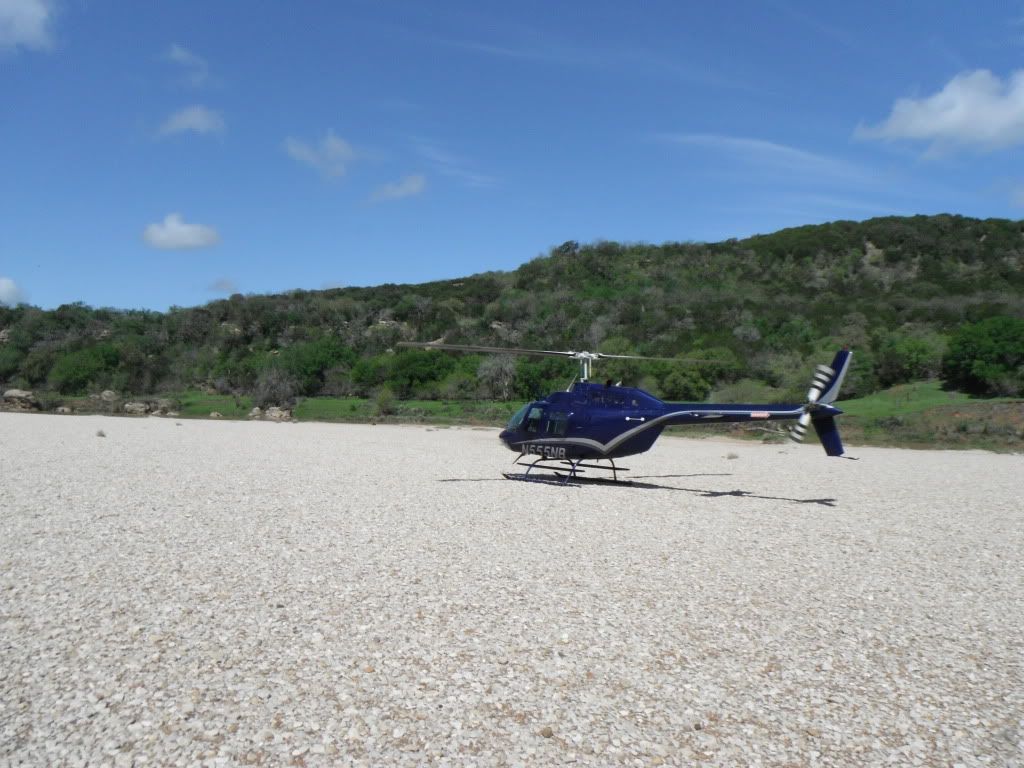
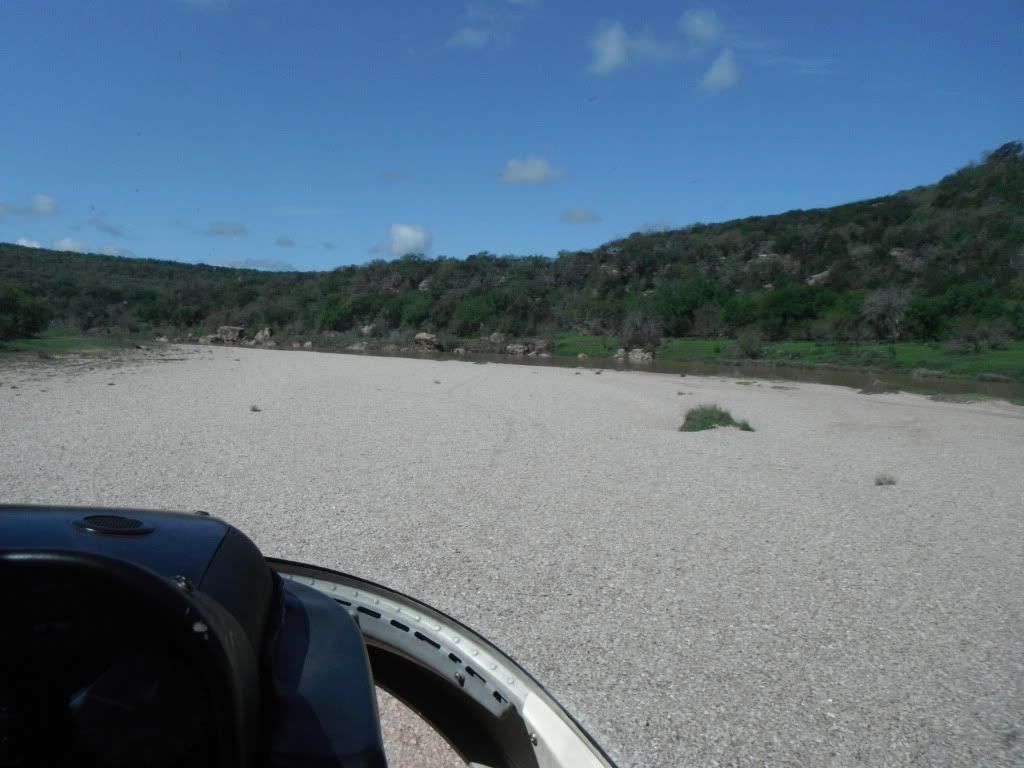
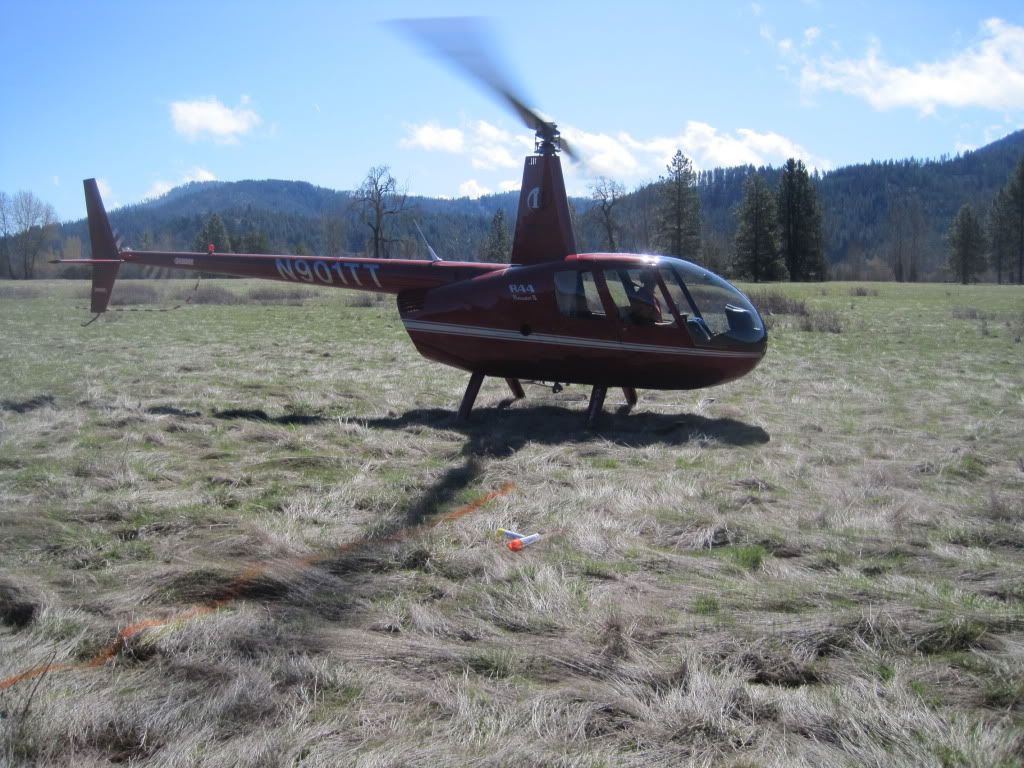
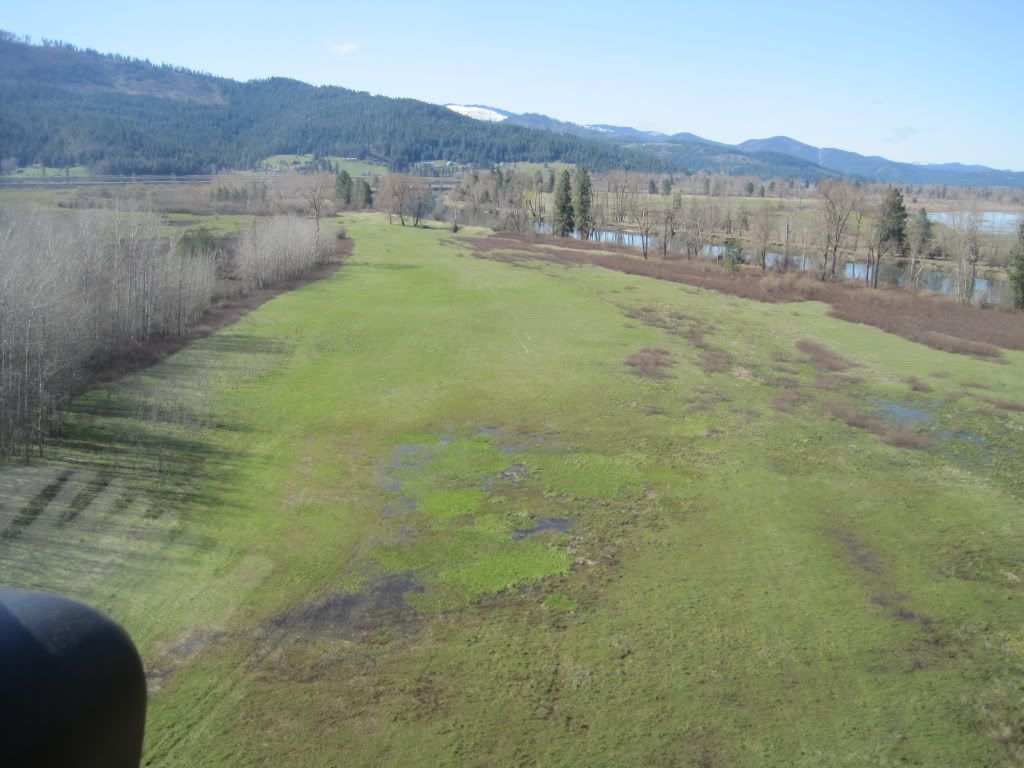
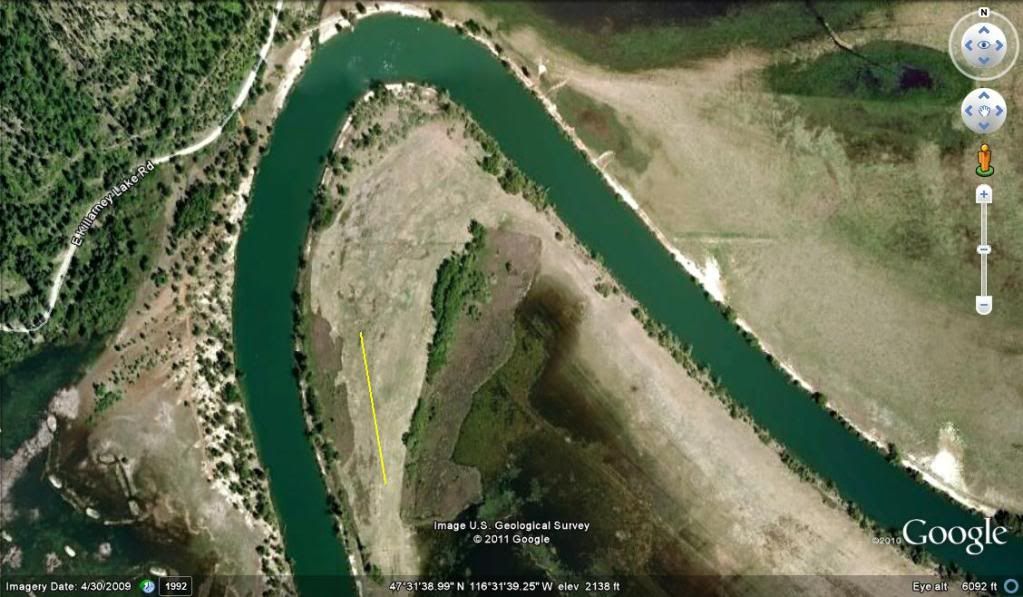
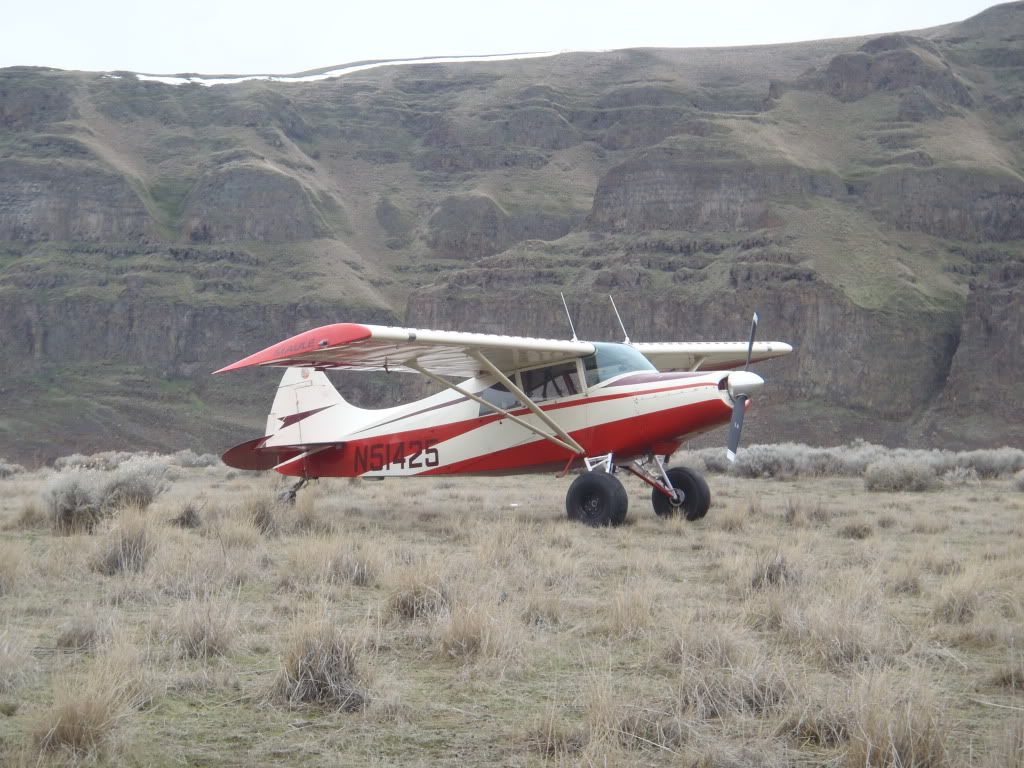
Landing at a spot where no one has ever landed before can be pretty disconcerting. The reason I usually perform an off field landing is to get somewhere I want to hunt, camp or wait out some weather ect. Google earth is an excellent tool to determine off field runway lenghts, slope, and altitude.
If you can walk a field first, that is the best recon. Personally I'm not a fan of dragging a landing spot, because this can cause problems of it's own. At some point obviously you are committed to land. A lot of landing areas are one way in and out too.
I think that doing your homework and getting all the information on a off field landing site will potentially save you and your machine. If I was in a different tax bracket I'd have a Bell L-4 Jet Ranger to scout all these landing sites.
Plan B, let your friend land there first!
Good Luck,
James
Clear Creek, Idaho
- Super-Maule offline
- Posts: 511
- Joined: Mon Nov 17, 2008 9:28 pm
- Location: Clear Creek, Idaho
Sun Jan 06, 2013 9:41 am
Re: Evaluating off-airport landing sites?
My single off airport landing was as the result of my engine coming apart. The field I landed in was remarkably smooth as fallow fields go and certainly looked smooth from the air, but compared to even poorly maintained grass/gravel/dirt airport strips, it was really rough, resulting in enough vibrations to crack both of the wheel pants of the mains.
No doubt MTV's advice is as good as it gets, but I would add, if you're not prepared to do all those things, stick with existing airports/airstrips.
Cary
No doubt MTV's advice is as good as it gets, but I would add, if you're not prepared to do all those things, stick with existing airports/airstrips.
Cary

"I have slipped the surly bonds of earth..., put out my hand and touched the face of God." J.G. Magee
Sun Jan 06, 2013 9:52 am
Re: Evaluating off-airport landing sites?
low rider wrote:So MTV , what is your take on how to tighten up a ski turn?In my limited experience with ski planes they do not turn on a dime . Especially in a meadow that has over 5 feet of snow on it..
Five feet of snow? Bring camping gear
 I've operated in that kind of stuff, and it can be "daunting" at best.
Turning a ski plane around is an exercise in physics, and the better you understand the forces involved, and can visualize them, the easier it works. To a point
.1) Skis are long and narrow, with skegs or wear strips to help keep them from sliding sideways. All this is specifically aimed at keeping the thing going straight. Now, you want to turn?
2) Tailwheels create a LOT of drag. They are also good at keeping you pointed more or less straight ahead (except of course, when the t/w drops into one main ski track, thus causing you to swerve......
 So, to turn, you need to get that tailwheel as light as possible. This requires nose down elevator and power. Kinda gives you the creeps, doesn't it?
3) Power, as noted above, will cause acceleration. Acceleration, combined with turning causes great huge turns...precisely what you do NOT want. So, use BURSTS of power. Blast the tail up (all the while holding FULL left rudder), back off, LOTS of power, then back off before the plane accelerates. Etc. Start conservatively for comfort's sake, but you're going to need LOTS of control input and LOTS of power. Rough on your engine? Maybe, but it's not real likely to overheat in ski conditions.
4) Use the available area for the turn. I start a turn around to the right, then swing it hard around to the left. Trying to make a more or less symmetrical turn. Be aware of potential obstacles, of course.
5) Don't get yourself into a tight spot where turning around may be impossible.
6) Tools: Shovel (aluminum grain scoop is best in my opinion...big but it MOVES some snow. Those little "mountaineering" shovels are cute, but we need to MOVE some SNOW), A small loop of fairly stout rope, made up so that it will drop over the front of a ski to create drag on that side....assists turning. Shut down, get out, drop loop over toe of ski, get in, turn around, shut down, remove loop, get in, and go. Survival gear....this means be prepared to sleep wherever you land. Might not be comfy, but.....I've slept out at -45, and not because I intended to. Wasn't fun, but the outcome was never in doubt. Blocks to block up skis to help prevent them from frosting up. You can do somewhat the same by digging the snow out from the front and back of the skis, leaving them resting on two pillars of snow, right under the pedestals. Warm clothes, and layers, so you can remove a few layers while you're working, then suit up to stay warm while not working.
7) "Tricks and tools": I have seen hydraulic wheel skis set up hydraulically so that you can select one ski down, the other up. The side with the wheel down will help the plane turn that direction. Don't know if those were legal.... Poor man's version: One ski always retracts first in any system. Figure out which one it is in your system, then plan to turn that direction. Sliding toward the turn, stop, start retracting the skis till one ski comes up, stop pumping, then turn. Once straight, lower that ski again, and go. Consider carrying a 100 foot long piece of 1/4 inch cable, with loops in each end, swaged, and a come along. Be careful: You CAN break stuff with a come along. I also carry ice climbing Ice Screws. They can provide purchase in lake ice to hook the come along to, and/or good tiedowns for overnight.
Tie a long rope to your tail spring, and let it trail. If you have a passenger, ask them to get out, and help muscle the tail around by pulling on that rope. An old friend who worked for my outfit in the fifties and sixties as a pilot/warden told me once why he learned to fly. His first winter in Fairbanks he wasn't a pilot. He accompanied one of the old time bush pilots on a ski flight in a Stinson Gull Wing on straight skis. That is a LARGE airplane, by the way. They got into a place where it wasn't going to turn tight enough and the pilot told him to get out and pull the tail around with that rope trailing behind. He did, but it was a very short rope. It worked. After he climbed back into the plane, covered with snow and half blind, the bush pilot told him "Son, there are two kinds of folks doing this kind of work: Blasters and Pushers, and I think you just found out that it's better to be a Blaster than a Pusher." Said he learned to fly that spring.
Finally, bear in mind that those skis can and WILL exert a LOT of torque on your landing gear legs when turning, especially in deep snow. Recall my first comment: The skis are designed to go straight, not turn. So, while it may be possible to actually turn a stationary ski plane around with muscle and shovels, be VERY careful that you don't torque those expensive gear legs, or worse break something. It's happened.
I got biblical stuck in a C-185 my second winter of ski flying. Thought I was pretty knowledgeable at that point
 . Wheel skis and a heavy airplane. Landed alongside the shore, and put down good tracks to evaluate the overflow condition. I KNEW there was lots of overflow around...DUH! I beat down my landing track, had no intention of turning...lake was long enough to land, park, take off same direction, so I built a major "runway" with my skis. Then I went off a ways to look at other things while I waited for the water to seep into the tracks. Tracks turning black are bad news, and great advertising as to just how warm the home fires are..... Came back after 20 minutes or so, tracks were nice and white. Landed. As I came to a stop, the right ski broke through the crust into the overflow and the plane swerved almost perpendicular toward shore. Shucks.
That's when I made the first screw up. Instead of going ashore, gathering lots of wood and getting a good fire going, I immediately started trying to get that plane un-stuck. Long story short, I got it out of there, about seven hours later. I was totally soaked and hypothermic by then, and it was dark. Did I mention it was -35? I took off out of there, because at that point, I probably couldn't have survived the night out. Everything I had on me was soaked to the bone. Flew back to FAI, landed on the (unlighted) ski strip (skis wouldn't retract--totally iced up), and drove home to a warm hearth. That was a wake up call for me....you can get hurt playing these games if you're stupid.
Bottom line, like any other form of off airport flying, ski flying offers great fun, and the opportunity to break stuff. Airplanes are pretty fragile, so be careful in how you apply force.
Most of all, be prepared to spend the night, or two, if necessary. Keep that SPOT with good batteries, and wait for the cavalry if need be.
MTV
Sun Jan 06, 2013 10:36 am
Re: Evaluating off-airport landing sites?
Around here almost all the lz's for flying skis are over 6 thousand feet in elevation. Add 5 feet of snow and as you said daunting at best. It is also not very cold here so a lot of the time the snow is not "good" snow. Takes literally forever to get off . It would be ideal to land then takeoff in the same direction without having to turn around but that is not usually the case with the elevation here. It's amazing how much the ski plane performance sucks pond water on departure. Would love to do some low elevation ski flying and see what it's like.Have you tried the rope around one ski trick in super deep snow?I've heard of the put one wheel down trick but like you said not sure too many ski setups have that option.Long thought process for each arrival and departure .Kinda like floats with a lot more ways to get stuck.One thing we do have in our favor is that the zone we are in is not very remote and can be reached by snow machine pretty easy.
vail
Sun Jan 06, 2013 10:59 am
Re: Evaluating off-airport landing sites?
MTV's comments: # 5 should be all caps! I am real glad, when I get stuck, I'm not flying a bigger plane, I can just imagine the work it'd take to muscle out a bigger bird 
I can control my Datum wheel skis separate, and have one ski all or partway down or any combination in between. I have used this feature once or twice, but so far never for real in a stuck type situation, it does raise the possibilty of getting your more stuck. But then again so does everything else, and it's good to have lots of tools in the tool box.
I just drilled my landing gear, no loss of strength where I did it, and now have the option of using a tow bridle, this will be handy for a straight pull up my ramp and maybe in other situations. I already have a permanent hitch point off the tailspring bolt that allows me to tow the rear without worries of fouling the rudder cables, I have always wanted a sailplane tow plane type release, but they are heavier and more complex ($$) then I like.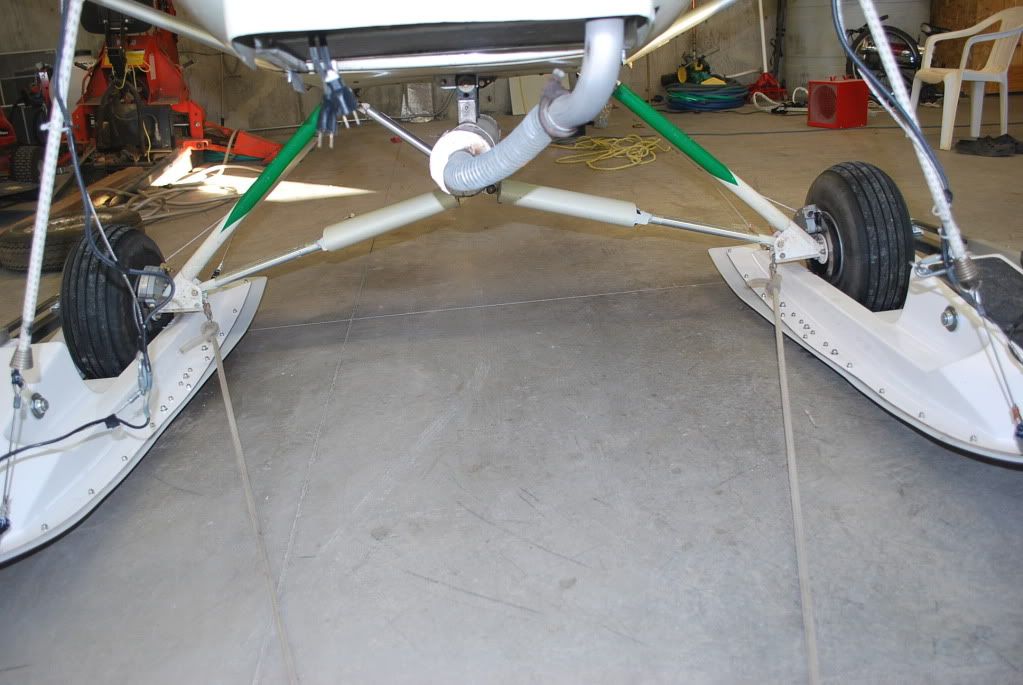
I can control my Datum wheel skis separate, and have one ski all or partway down or any combination in between. I have used this feature once or twice, but so far never for real in a stuck type situation, it does raise the possibilty of getting your more stuck. But then again so does everything else, and it's good to have lots of tools in the tool box.
I just drilled my landing gear, no loss of strength where I did it, and now have the option of using a tow bridle, this will be handy for a straight pull up my ramp and maybe in other situations. I already have a permanent hitch point off the tailspring bolt that allows me to tow the rear without worries of fouling the rudder cables, I have always wanted a sailplane tow plane type release, but they are heavier and more complex ($$) then I like.
- courierguy offline
- Posts: 4197
- Joined: Thu Mar 31, 2005 6:52 pm
- Location: Idaho
"Its easier to apologize then ask permission"
Tex McClatchy
Tex McClatchy
DISPLAY OPTIONS
Who is online
Users browsing this forum: No registered users and 13 guests
Latest Features
-
-
Featured Bush Planes
As one of the undisputed legends of bush flying, the Cessna 180 hauls a…Read More -
Aircraft Ownership and Maintenance
9 modification mistakes aircraft owners make when trying to "bush out" their birds—why some…Read More -
Live to Tell
A Minnesota pilot is surprised to learn that the sudden asymmetric drag of an…Read More


Latest Knowledge Base
-
Destinations
Canada offers some of the most spectacular backcountry flying on the continent. Here's what you need to know before you go.Read More -
Safety and Survival
Hope that you never have to use your survival vest but knowing you have it and knowing how to use…Read More -
Destinations
A regional guide with ideas for winter camping destinations in California, Nevada, New Mexico, and Arizona.Read More -
Aircraft
Finding an affordable aircraft that can handle the backcountry for $80K or less? A challenge for sure, but with the…Read More


